THE DIARY OF A YOUNG GIRL

THE DIARY OF A YOUNG GIRL

THE DEFINITIVE EDITION

FRANK, ANNE

$ 54,000.00
Editorial:
BANTAM
Año de edición:
1997
Materia
Biografías y autobiografías
ISBN:
978-0-553-57712-9
Páginas:
335
Idioma:
Inglés
Cubierta:
Tapa Blanda

Disponibilidad:

  • Av.ChileAgotado
  • ZonaGAgotado
$ 54,000.00
Añadir a favoritos

1. a) After the Nazi invasion of the Netherlands in May 1940, the Dutch people were immediately faced with the question of choice: how to respond to the Nazi occupation. Tens of thousands of Dutch people followed Hitler, and millions more looked the other way. Eventually, a resistance movement began to grow. The Nazis needed Dutch collaborators to carry out their fascist decrees. What would have influenced someone to become a collaborator? What factors would have encouraged someone to join the resistance? Do you think these factors were based on personal characteristics or political beliefs? What was the price of resistance during the war? What was the price of collaboration? b) Anne Frank and her family were German refugees who resettled and tried to build their lives in the Netherlands. Although the Franks were proud of their German heritage, their feelings toward Germany became very complicated during the war. Anne wrote: "Fine specimens of humanity, those Germans, and to think I'm actually one of them! No. that's not true, Hitler took away our nationality long ago. And besides, there are no greater enemies on earth than the Germans and Jews." (October 9, 1942.) Although Anne had lived in the Netherlands since 1934, she did not become a Dutch citizen. Did Anne have a nationality? If not, were Anne's civil rights protected by any nation? By 1939 some 250,000 Jews, half of Germany's Jewish population, had fled their homeland. Did these refugees have any guaranteed rights? After the war Otto Frank responded to references to "the Germans" by asking "which German?" He believed strongly that blaming all Germans was another form of stereotyping. What constitutes a stereotype? How is a stereotype different from discrimination? c) In The New York Times the writer Anna Quindlen asked, "Would our understanding of the Holocaust be quite the same if Anne Frank had not taken a small plaid diary into hiding with her?" What has most shaped your understanding of World War II: personal experience, Anne's diary, popular films such as Schindler's List, newsreel footage, academic or historical texts? d) Otto Frank chose to edit out some of the negative comments Anne made about her mother and a number of the other residents of the Secret Annex--comments that have been restored in the new translation by Susan Massotty. He believed that Anne would have wanted him to do so. Do you think he was correct? e) In her diary Anne opined: "...if you're wondering if it's harder for the adults here than for the children, the answer is no...Older people have an opinion about everything and are sure of themselves and their actions. It's twice as hard for us young people to hold on to our opinions at a time when ideals are being shattered..." (July 15, 1944.) When was the last time as an adult that you experienced the "shattering" of an ideal? Is the media a neutral force, or do you think it plays a role in supporting or destroying idealism? f) Are there certain characteristics common among those few individuals who risked their own lives to rescue Jews during World War II? Why do so many of them deny their own heroism? g) A disturbing number of neo-Nazi groups have taken hold in all parts of the world. What social conditions would be necessary for them to grow? What do you believe would be the most likely basis of another world war: pride, nationalism, fear, racism, economic interests, or religious intolerance? h) Nazi leader Adolf Eichmann was asked how he could explain the killing of 6 million Jews. He answered, "One hundred dead are a catastrophe, a million dead are a statistic." Have we become more or less tolerant of murder since he made this observation? i) Anne Frank wrote: "I don't believe the war is simply the work of politicians and capitalists. Oh no, the common man is every bit as guilty; otherwise, people and nations would have rebelled long ago!" (May 3, 1944.) How should accountability be assigned? So many say they never understood what was happening. How likely could that have been? j) Hitler published Mein Kampf in 1925, describing his plan for the elimination of Jews. At that time, what steps might have been taken to stop Hitler's rise to power?

Artículos relacionados

  • VIDA DE MIGUEL DE CERVANTES SAAVEDRA
    SLIWA, KRZYSZTOF
    «Una biografía total de Miguel de Cervantes que [...] consigue llenar el vacío biográfico que otras semblanzas aparecidas recientemente no han conseguido ocupar». Emilio Maganto PavónEn este imponente ensayo, el catedrático de la Universidad de Hampton Krzysztof Sliwa ha construido el edificio de la que es, probablemente, la biografía crítica definitiva del autor de El ingenios...
    En stock

    $ 85,000.00

  • REBELDÍA, ARMAS Y DEMOCRACIA
    BUSTAMANTE, EVERTH
    Durante más de cincuenta años, Everth Bustamante ha estado en el centro de la política colombiana: como dirigente del m-19 e integrante de la cúpula del movimiento, como alcalde, congresista y testigo privilegiado de la transformación del país.En estas memorias, Bustamante narra desde adentro medio siglo de historia reciente: desde las elecciones del 19 de abril de 1970 hasta e...
    En stock

    $ 69,000.00

  • EL PEOR POLICÍA DEL MUNDO
    ACOSTA ROMERO, ANDRÉS
    « Mi nombre es Andrés Acosta Romero. Fui integrante de la Policía Nacional de Colombia por más de una década. Durante mi permanencia en la institución siempre, en el fondo, supe que tarde o temprano me apartaría de las filas sin obtener la pensión. Escribí este libro por dos razones. La primera de ellas es poder representar aunque sea en una pequeña parte el diario vivir del po...
    En stock

    $ 69,000.00

  • MI CAUSA: COLOMBIA
    URIBE TURBAY, MIGUEL
    Este testimonio, escrito en primera persona y publicado tras el trágico atentado que le arrebató la vida a Miguel Uribe Turbay, es a la vez una autobiografía y un manifiesto de amor por Colombia.Uno de los últimos sueños de Miguel Uribe Turbay fue compartir con los colombianos este libro, en el que llevaba trabajando cerca de dos años. En sus páginas dejó plasmada la historia d...
    En stock

    $ 65,000.00

  • PELO LIBRE, ALMA LIBRE
    LARA, MABEL
    Aparecer en la pantalla de la televisión con su pelo crespo al natural, cambió la vida de la periodista y presentadora de noticias Mábel Lara, una figura emblemática de los medios de comunicación nacionales, Ese hecho, producto del azar, impactó y desató una inesperada revolución entre las mujeres negras, y la llevó a revisar su experiencia de vida y a investigar la de otros mi...
    En stock

    $ 69,000.00

  • DÉBORA ARANGO DE PERFIL
    CABEZAS, VÍCTOR DANIEL
    Débora Arango concilió una vida discreta y hogareña con la creación de la obra pictórica más revolucionaria del Siglo XX colombiano, Su discreción permanece, pues a pesar de ser una artista públicaque se asoma cada vez que pagamos con un billete de dos mil pesos Débora ha quedado opaca y escurridiza, A ese reto, de observarla y narrarla, se le mide este perfil en el que el auto...
    En stock

    $ 69,000.00

Otros libros del autor

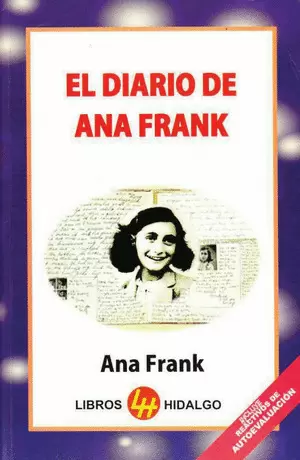
  • EL DIARIO DE ANA FRANK
    FRANK, ANNE
    Este es el relato de una niña judía de trece años que escribió su diario entre el 12 de junio de 1942 y el 1 de agosto de 1944.En estas páginas, Ana cuenta su vida y la de otras siete personas judías, que, como ella, se vieron obligadas a esconderse en la Casa de atrás: una buhardilla ubicada en la parte trasera de las oficinas de su padre. Desde ese lugar, la niña describe las...
    En stock

    $ 29,000.00

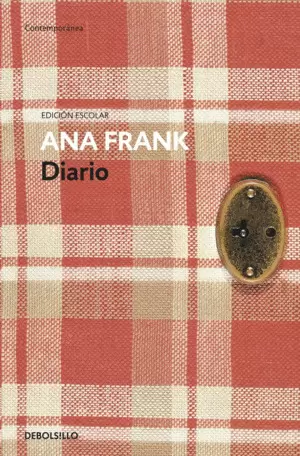
  • EL DIARIO DE ANA FRANK
    FRANK, ANNE
    Cuando Annelies Marie Frank Hollander, más conocida como Ana Frank, cumplió trece años, sus padres le regalaron un cuaderno que ella usó como diario. En él relató sus vivencias y sentimientos durante los casi dos años y medio que vivió escondida de los nazis junto con su familia. Lo tituló "La casa de atrás" y, a día de hoy, se trata de uno de los libros más leídos en todo el m...
    En stock

    $ 33,000.00

  • EL DIARIO DE ANA FRANK
    FRANK, ANNE
    El diario de Ana Frank es uno de los testimonios más conmovedores de una víctima de la persecución despiadada y el terrorismo de Estado: en este caso, el nazismo. Su presencia, profundamente humana, nos ha quedado en las confidencias de sus páginas. Coedición con la editorial chilena Pehuén Editores. ...
    En stock

    $ 45,000.00

  • EL DIARIO DE ANA FRANK
    FRANK, ANNE
    La autora, una niña de trece años, fue hija de comerciantes judíos alemanes que tuvieron que ocultarse luego de experimentar persecusiones. Cuando fueron descubiertos, fueron enviados a campos de concentración como prisioneros. Es allí donde Ana escribe su famoso diario, en el cual describe todo lo que vivió como prisionera, y es allí mismo donde se señala que murió. ...
    En stock

    $ 45,000.00

  • DIARIO DE ANA FRANK
    FRANK, ANNE
    Tras la invasión de Holanda, los Frank, comerciantes judíos alemanes emigrados a Amsterdam en 1933, se ocultaron de la Gestapo en una buhardilla anexa al edificio donde el padre de Ana tenía sus oficinas.Eran ocho personas y permanecieron recluidas desde junio de 1942 hasta agosto de 1944, fecha en que fueron detenidos y enviados a campos de concentración. En ese lugar y en las...
    En stock

    $ 55,000.00

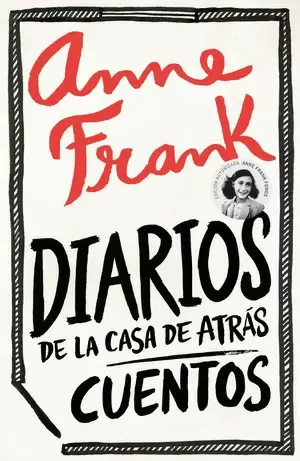
  • DIARIOS DE LA CASA DE ATRÁS
    FRANK, ANNE
    Tras la invasión de Holanda, los Frank, una familia de comerciantes judíos alemanes emigrados a Amsterdam en 1933, se ocultaron de la Gestapo en una buhardilla anexa al edificio donde el padre tenía sus oficinas. En las más precarias condiciones, Anne, una niña de trece años, escribió su estremecedor Diario: un testimonio único en su género sobre el horror y la barbarie nazi, y...
    En stock

    $ 62,000.00