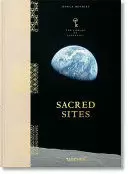
Sacred Sites nos lleva de viaje por la historia del arte y de la arquitectura sacros para explorar las innumerables formas en que imbuimos nuestros entornos de un significado profundo y duradero. Desde nuestra temprana visión de la naturaleza y del cuerpo como templos hasta nuestra asunción de futuros reinos imaginarios, viajamos por los vastos y místicos paisajes del mito, la religión y la imaginación.
En nuestras reuniones dotamos de alma a los espacios, nos juntamos alrededor de hogueras, nos postramos ante el altar del bosque, alabamos en el templo a nuestras divinidades. En nuestras peregrinaciones, labramos rutas indelebles, recorremos nuestro camino meditativo a lo largo de continentes y, generación tras generación, pisamos, una y otra vez, terrenos sagrados. Y en nuestras ofrendas creativas al espíritu, pensamos nuevos mundos con odas tremendamente imaginativas a lo que consideramos sagrado: templos dorados tallados en roca, enormes espirales esculpidas en arena y tierra o santuarios silenciosos escondidos en arboledas. Pintamos las antiguas paredes de las cuevas, tallamos petroglifos para marcar el camino, colocamos rosas en el santuario a la luz de las velas.
Lentamente, piedra a piedra, construimos monumentos a nuestros dioses, una geometría cósmica contenida dentro de nuestra arquitectura sagrada de adoración. Estos patrones ocultos se pueden encontrar en las misteriosas e imponentes pirámides repartidas por distintas partes del mundo y por una asombrosa diversidad de culturas, en los santuarios de mármol construidos para albergar a las diosas griegas y romanas, en los monasterios de montaña de la antigua Asia azotados por el viento y en las viviendas en acantilados de los indígenas del suroeste de Estados Unidos.
Naturaleza, arte, belleza, estos son los elementos comunes que se encuentran tanto en los lugares sagrados de nuestros antepasados como en la multitud de entornos donde nos esforzamos por trascender y conectar con nosotros mismos. Trazando una ruta sagrada desde los escarpados templos de piedra hasta obras de la arquitectura moderna, el quinto volumen de La Biblioteca del Esoterismo rinde homenaje a la historia colectiva de los que el culto humano ha convertido en espacios sacrosantos.
Taking us on a journey through the history of sacred art and architecture, Sacred Sites explores the myriads of ways in which we imbue our environments with profound and enduring meaning. From our early designation of nature and the body as temple to our futuristic embrace of imaginary realms, we travel the vast and mystical landscapes of myth, religion, and imagination.
Through gathering, we ignite our spaces with spirit, we circle the bonfire, bow down at the forest altar, give praise at the temple to our chosen divinities. Through pilgrimage, we carve indelible pathways, making our meditative way across continents, generations of footsteps treading, again and again, upon sacred grounds. And through our creative offerings to spirit - we envision new worlds, wildly imaginative odes to what we deem as holy; golden temples hewn of rock, enormous spirals sculpted from sand and soil, silent sanctuaries hidden among wooded groves. We paint the ancient cave walls, carve petroglyphs to mark the way, place roses in veneration at the candlelit shrine.
Slowly, stone-by-stone, we build monuments to our gods, a cosmic geometry held within our sacred architecture of worship. These hidden patterns can be found in the mysterious, towering pyramids found across the globe and throughout an astounding diversity of cultures, in the marble sanctuaries built to house the Greek and Roman goddesses, and in the windblown mountain monasteries of ancient Asia and the indigenous cliff-dwellings of the American Southwest.
Nature, art, beauty, these are the common elements found both within the places made sacred by our ancestors and in the multitude of environments where we strive to connect to source, and to ourselves. Tracing a hallowed route from rugged stone temples to transcendent works of modern architecture, the fifth volume in The Library of Esoterica celebrates the collective history of spaces made sacrosanct through human worship.